
Gelatin, HPMC, and pullulan are the three main capsule shell materials used in supplement manufacturing. Gelatin is animal-derived and the lowest-cost option, HPMC is plant-based and the standard for vegan and vegetarian products, and pullulan is a fermented-tapioca material that supports organic and clean-label positioning. The right choice depends on your brand’s market, your formula’s ingredients, and your budget.
This guide compares all three across cost, dissolution, ingredient compatibility, certifications, and positioning so you can match the shell to your product, not just your preferences.
Key Takeaways
- The three primary capsule shell materials are gelatin, HPMC (vegan), and pullulan (organic) each with distinct cost, sourcing, and certification profiles.
- Gelatin is the lowest-cost, industry-default option, but it’s animal-derived and unsuitable for vegan or vegetarian brands.
- HPMC is the plant-based standard for vegan and vegetarian lines, with performance nearly identical to gelatin.
- Pullulan is the premium, clean-label choice, certified organic, non-GMO, and naturally low in oxygen permeability.
- Shell material is a separate decision from capsule size; choose size by formula weight, then material by brand positioning and budget.
What Are Capsule Shells Made Of?
A capsule shell is the two-piece outer casing that holds a supplement’s powder, granule, or pellet fill. The shell material determines the capsule’s cost, dissolution behavior, moisture sensitivity, and which dietary and certification claims the finished product can carry.
Three materials dominate the supplement industry:
- Gelatin – derived from animal collagen (bovine or porcine)
- HPMC – hydroxypropyl methylcellulose, derived from plant cellulose
- Pullulan – a polysaccharide produced by fermenting tapioca starch
All three are available across standard capsule sizes (1, 0, 00, and 00EL) and in clear or colored options.
What Are Gelatin Capsules?
Gelatin capsules are made from animal-derived collagen and are the most widely used capsule shell in the supplement industry. They’re the lowest-cost option, dissolve quickly in the stomach, and have a long track record across pharmaceutical and nutraceutical products.
Advantages of Gelatin Capsules
- Lowest cost of the three materials
- Fast dissolution breaks down quickly in gastric fluid
- Strong availability and broad supplier base
- Proven compatibility with a wide range of powder fills
Limitations of Gelatin Capsules
- Animal-derived – unsuitable for vegan, vegetarian, kosher, or halal positioning without specific sourcing
- Moisture-sensitive – can become brittle in dry conditions or soft in humidity
- Reactivity – can cross-link with certain aldehyde-containing ingredients, slowing dissolution over time
Gelatin remains the default for brands without dietary restrictions or clean-label positioning, where cost efficiency is the priority.
What Are HPMC (Vegan) Capsules?
HPMC capsules are made from hydroxypropyl methylcellulose, a plant-derived material, making them suitable for vegan and vegetarian supplements. They perform nearly identically to gelatin in fill capacity and dissolution while carrying plant-based credentials.
Advantages of HPMC Capsules
- Vegan and vegetarian – plant-based and broadly accepted
- Lower moisture content – more stable across humidity ranges than gelatin
- Less reactive – better compatibility with hygroscopic and reactive ingredients
- Identical fill performance – to gelatin across all standard capsule sizes
Limitations of HPMC Capsules
- Higher cost than gelatin, though the gap is modest
- Slightly slower dissolution than gelatin in some conditions, though within acceptable ranges for supplements
HPMC is the practical standard for any brand targeting vegan, vegetarian, or plant-based consumers. For most modern supplement lines, it’s the default upgrade from gelatin.
What Are Pullulan (Organic) Capsules?
Pullulan capsules are made from a polysaccharide produced by fermenting tapioca starch, making them naturally organic-compatible and clean-label. They’re the premium capsule shell, supporting certified organic, non-GMO, and vegan claims simultaneously.
Advantages of Pullulan Capsules
- Certified organic and non-GMO supports the cleanest label positioning
- Vegan and vegetarian by default
- Low oxygen permeability naturally protects sensitive, oxidation-prone ingredients like probiotics and oils
- Clean ingredient story fermented from a single plant source
Limitations of Pullulan Capsules
- Highest cost of the three materials
- Narrower supplier base than gelatin or HPMC
Pullulan is the choice for premium, organic-certified, and clean-label brands where the capsule itself is part of the product story and where the target consumer pays for it.
Gelatin vs. HPMC vs. Pullulan: Side-by-Side Comparison
The table below summarizes the practical differences across the three shell materials.
| Attribute | Gelatin | HPMC (Vegan) | Pullulan (Organic) |
|---|---|---|---|
| Source | Animal collagen | Plant cellulose | Fermented tapioca |
| Cost | Lowest | Moderate | Highest |
| Vegan/Vegetarian | No | Yes | Yes |
| Organic-compatible | No | Limited | Yes |
| Dissolution | Fast | Fast (slightly slower) | Fast |
| Moisture stability | Lower | Higher | High |
| Oxygen barrier | Standard | Standard | Naturally low permeability |
| Best for | Cost-driven, no dietary limits | Vegan/vegetarian lines | Premium, organic, clean-label |
How Do You Choose the Right Capsule Shell?
Capsule shell selection follows three questions: who is your consumer, what’s in your formula, and what’s your budget. Answer them in that order and the right material becomes clear.
Step 1: Define Your Market and Claims
If your brand targets vegan, vegetarian, or plant-based consumers, gelatin is off the table choose HPMC or pullulan. If you’re pursuing organic certification, pullulan is the only shell that supports it cleanly. If you have no dietary restrictions and price is the priority, gelatin works.
Step 2: Match the Shell to Your Ingredients
Some ingredients dictate the shell. Probiotics and oxidation-prone actives benefit from pullulan’s low oxygen permeability. Hygroscopic or reactive ingredients pair better with HPMC’s lower moisture content and reduced reactivity. Confirm compatibility during R&D the wrong shell can shorten shelf life or slow dissolution.
Step 3: Weigh Cost Against Positioning
Shell cost rises from gelatin to HPMC to pullulan. The question isn’t which is cheapest it’s which cost is justified by your market. A premium organic brand loses credibility in a gelatin capsule. A value brand erodes margin in pullulan. Match the shell to the shelf you’re competing on.
Does Capsule Shell Material Affect Capsule Size?
No shell material and capsule size are independent decisions. All three materials are manufactured across the standard sizes (1, 0, 00, and 00EL) with equivalent fill capacities. Choose your capsule size based on formula weight and ingredient density first, then select the shell material based on positioning and budget.
This separation gives brands full flexibility: a high-dose organic formula can use a size 00EL pullulan capsule; a low-dose vegan extract can use a size 1 HPMC capsule. The combinations are open.
Can You Get Colored or Clear Capsules in Any Material?
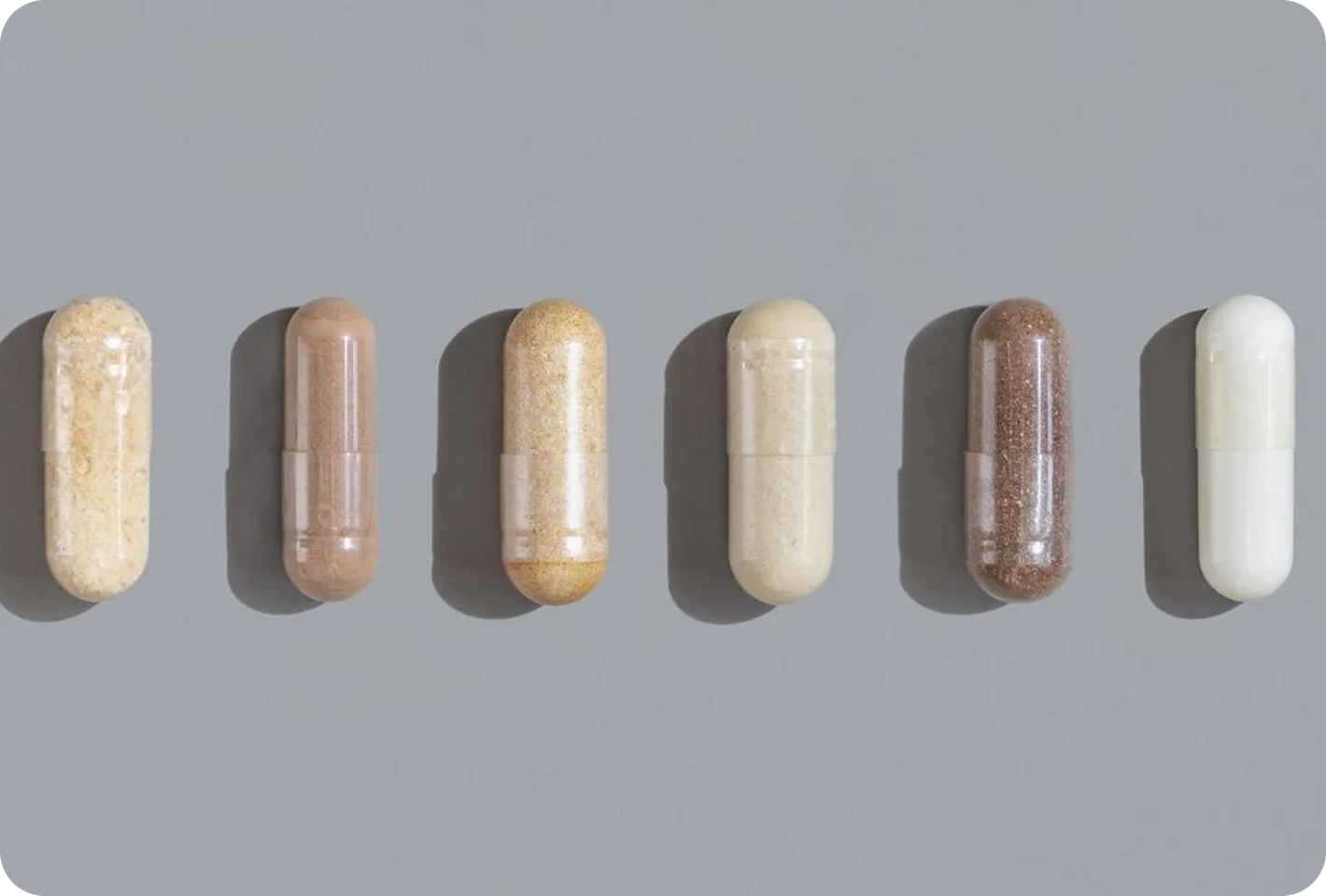
Yes. Gelatin, HPMC, and pullulan capsules are all available in clear or colored options. Clear capsules let the fill show through useful for transparency-focused branding while colored capsules support shelf differentiation, light protection for sensitive ingredients, and brand identity.
Color and material are separate choices, finalized during the Finished Product Specification stage alongside size, fill weight, and packaging.
How Capsule Shell Choice Fits Into Manufacturing
Capsule shell selection is locked in during R&D and confirmed in the Finished Product Specification (FPS) before production. Shell material doesn’t typically change lead times new capsule projects run 10–12 weeks and returning projects 8–10 weeks regardless of material.
Changing shell material on an existing product triggers a new FPS approval cycle, since the material affects dissolution, stability, and claims. Most brands finalize their shell in R&D specifically to avoid reformulation downstream.
What Capsule Shells Does WB Blends Offer?
WB Blends manufactures capsules in all three shell materials gelatin, HPMC (vegan), and pullulan (organic) across standard sizes 1, 0, 00, and 00EL, in clear or colored options. Every capsule project includes in-house R&D support and full lab testing, with finished products screened for heavy metals, microbiological contaminants, identity, and potency before shipment.
FAQs
Are HPMC capsules better than gelatin?
HPMC capsules aren’t universally better they’re better for specific needs. HPMC is the right choice for vegan and vegetarian products and offers greater moisture stability and lower ingredient reactivity. Gelatin remains better when cost is the priority and there are no dietary restrictions.
Are pullulan capsules vegan?
Yes. Pullulan capsules are vegan and vegetarian by default, made from fermented tapioca starch rather than any animal source. They also support certified organic and non-GMO claims.
Which capsule shell is best for probiotics?
Pullulan is often the strongest choice for probiotics because of its naturally low oxygen permeability, which helps protect live cultures from oxidation. HPMC is also widely used. The best choice depends on your specific formula and shelf-life targets.
Do vegan capsules dissolve as well as gelatin?
Yes, within acceptable ranges. HPMC and pullulan dissolve effectively in the digestive tract, though HPMC can dissolve slightly slower than gelatin under certain conditions. For dietary supplements, all three deliver reliable dissolution.
Is pullulan worth the higher cost?
Pullulan is worth it for premium, organic-certified, and clean-label brands where the capsule supports the product story and the target consumer pays for quality. For value-positioned products, the cost is harder to justify.
Can I switch from gelatin to vegan capsules later?
Yes, but switching shell material requires a new Finished Product Specification and may affect dissolution, stability, and label claims. Most brands lock in shell material during R&D to avoid reformulation after launch.
Are gelatin capsules halal or kosher?
Standard gelatin is animal-derived and not inherently halal or kosher it depends on the source and certification. Brands needing halal or kosher capsules typically choose certified-compliant gelatin or switch to plant-based HPMC or pullulan, which sidestep the issue entirely.
Match the Shell to Your Brand
The capsule shell isn’t a background detail it shapes your cost structure, your claims, your shelf positioning, and your product’s stability. Gelatin wins on price. HPMC wins for plant-based brands. Pullulan wins on clean-label premium positioning. The right answer is the one that fits your market and your formula.
WB Blends manufactures all three shell materials in every standard capsule size, with in-house R&D to test compatibility and lab verification on every finished product.
Not sure which shell fits your formula? Request a Quote or explore our capsule manufacturing capabilities.