
What are nutraceuticals? They are food-derived or biologically sourced ingredients sold for health purposes beyond basic nutrition. The term is a market label with no legal definition in the United States, so your brand’s product must fit an existing category, usually dietary supplement. That category sets your claims, label and manufacturing rules.
Key Takeaways
- Nutraceutical is a market term with no US legal definition.
- US products are regulated by category, most often dietary supplement under DSHEA.
- Supplements can carry structure/function claims and, in limited cases, FDA-authorized health claims.
- 2025 market estimates run from $480.7 billion to $636.2 billion, depending on the firm.
Where Does the Term Nutraceutical Come From?
Dr. Stephen DeFelice coined the term in 1989 by joining “nutrition” and “pharmaceutical.” An AAPS PharmSci article confirms the date and notes that the word has no regulatory definition. It names a market, not a legal class.
What Are Nutraceuticals Under US Law?
In the United States, nutraceutical is not a legal category. FDA regulates a product by the category it fits, most often dietary supplement. FDA’s Q&A on dietary supplements says DSHEA placed supplements under foods, not drugs. An FDA interview on supplement oversight adds that FDA does not approve supplements before they reach the public.
For your brand, the label gives no regulatory status. Only drugs can make disease claims, so a disease claim can move a product out of the supplement category, according to FDA’s structure/function page.
What Qualifies an Ingredient as a Nutraceutical?
Three working tests define the category in industry. They are shorthand, not legal tests.
- Source: a food, plant, animal or microbial origin.
- Intended use: sold for a purpose beyond basic nutrition.
- Form: concentrated, purified or standardized for consistent dosing.
Curcumin extracted from turmeric passes all three. Raw turmeric root does not.
What Are the Main Types of Nutraceuticals?
Two classification systems are common. Each answers a different question about the same ingredient.
Classification by Source
Traditional sources are naturally occurring foods and plants, such as omega-3 fatty acids, probiotics, dietary fiber and curcumin. Non-traditional sources are engineered through fortification or biotechnology, such as vitamin D-fortified milk and recombinant vitamin B12.
Classification by Bioactive Compound
Nutrients, herbals and botanicals, phytochemicals such as flavonoids and carotenoids, and probiotics and enzymes.
What Are Examples of Nutraceuticals?
Common examples include omega-3 fatty acids, probiotics, curcumin, coenzyme Q10, collagen peptides, green tea catechins, lycopene, and plant sterols. Each is a defined ingredient that needs an identity specification and a lawful label name. Brands sell them as single-ingredient or multi-ingredient products.
What Is the Difference Between Nutraceuticals and Dietary Supplements?
A nutraceutical is a market term. A dietary supplement is a legal category. Most nutraceutical products reach the US market as dietary supplements.
| Term | US legal status | Claims |
|---|---|---|
| Nutraceutical | Market term. No legal definition. | Depends on the category the product fits. |
| Dietary supplement | Category of food under DSHEA (1994). No FDA approval before sale. | Structure/function and authorized health claims. No disease claims. |
| Conventional food, including “functional” food | Food. “Functional food” is also a market term. | Structure/function claims based on nutritive value. No FDA notification. |
| Drug | FDA approval before marketing. | Disease claims allowed after approval. |
How Are Nutraceuticals Regulated in the United States?
US products are regulated by category, not by the nutraceutical label. Most are dietary supplements under DSHEA. Your brand carries responsibility for safety, labeling, GMP compliance and claim substantiation.
Six obligations apply to a compliant supplement:
- Confirm ingredient status. A new dietary ingredient can require notification to FDA at least 75 days before marketing.
- Manufacture under cGMP, set out in 21 CFR Part 111.
- Substantiate every claim with evidence on file.
- Notify FDA within 30 days of first marketing a structure/function claim.
- Label correctly, with a Supplement Facts panel.
- Report serious adverse events to FDA.
What Claims Can a Nutraceutical Product Carry?
A dietary supplement can carry structure/function claims and, in limited cases, FDA-authorized health claims. It cannot claim to diagnose, treat, cure or prevent a disease.
Structure/Function Claims
These describe an ingredient’s role in the body, such as FDA’s example “calcium builds strong bones.” FDA does not review them before use. The label carries this disclaimer: “This statement has not been evaluated by the Food and Drug Administration. This product is not intended to diagnose, treat, cure, or prevent any disease.” See 21 CFR 101.93.
Authorized Health Claims
These describe a relationship between a substance and reducing the risk of a disease. FDA authorizes them by regulation after reviewing the scientific evidence, and the authority covers foods and dietary supplements. See FDA’s page on label claims. Use one only as the regulation allows, and confirm the conditions with a regulatory advisor.
What Do Brands Sell as Nutraceuticals?
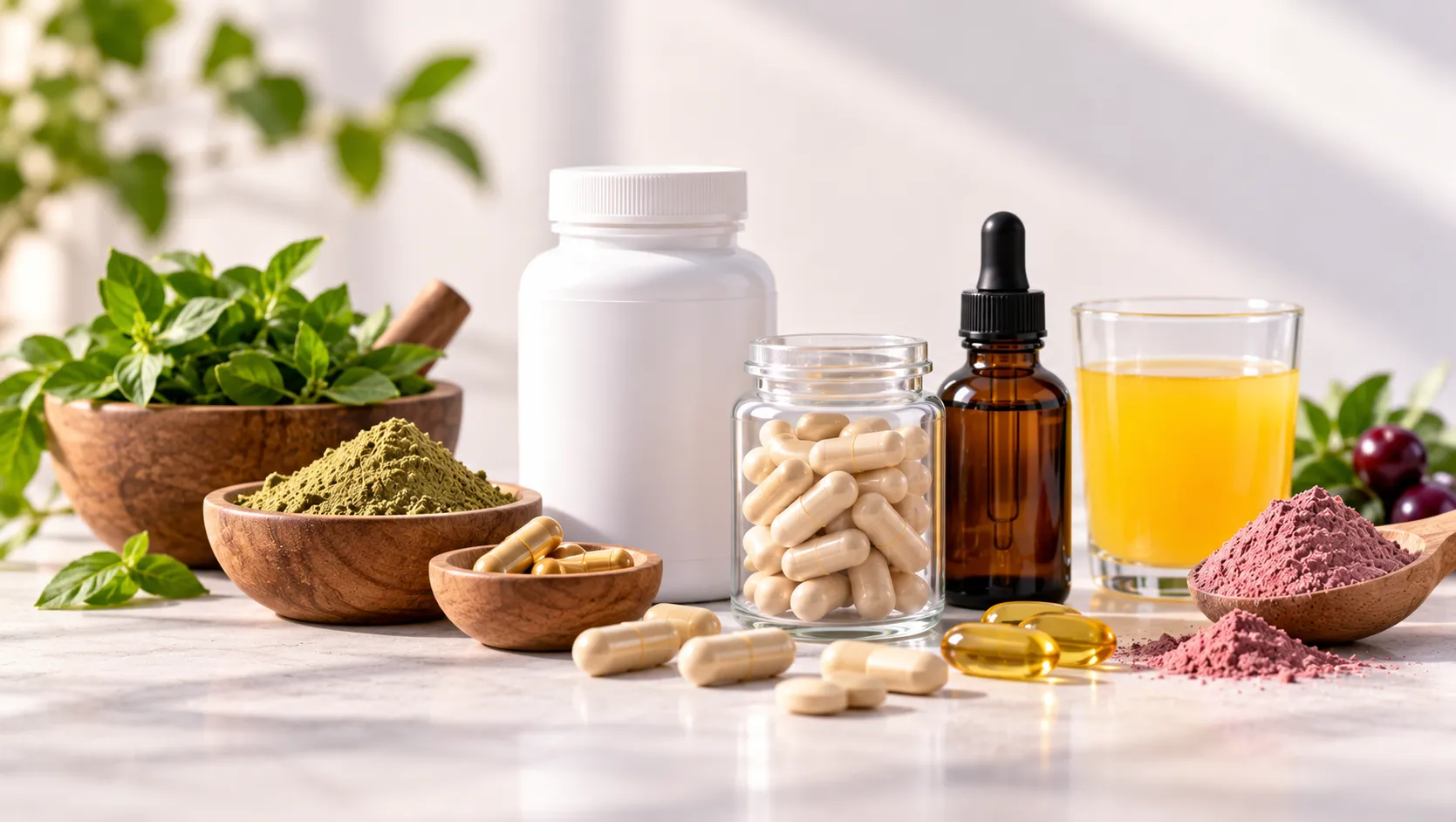
Brands sell nutraceutical ingredients mainly as dietary supplements in capsule, powder and liquid formats, and sometimes as foods or beverages. The product type sets the decisions your brand must make before production.
| Product type | Common formats | What your brand must decide |
|---|---|---|
| Botanical and herbal extracts | Capsule, liquid | Plant part and extract type. Standardization. Label name. Identity testing. |
| Vitamin and mineral products | Capsule, powder, liquid | Nutrient form. Dose per serving. Supplement Facts naming. |
| Probiotic products | Capsule, powder | Strain list. How and when you state the count. Storage. |
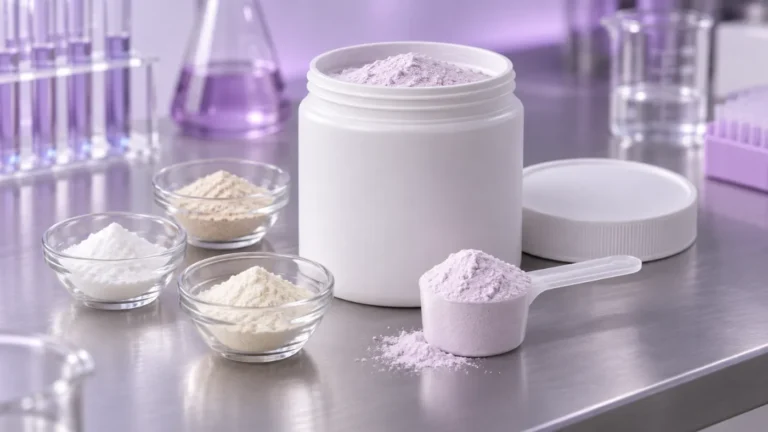
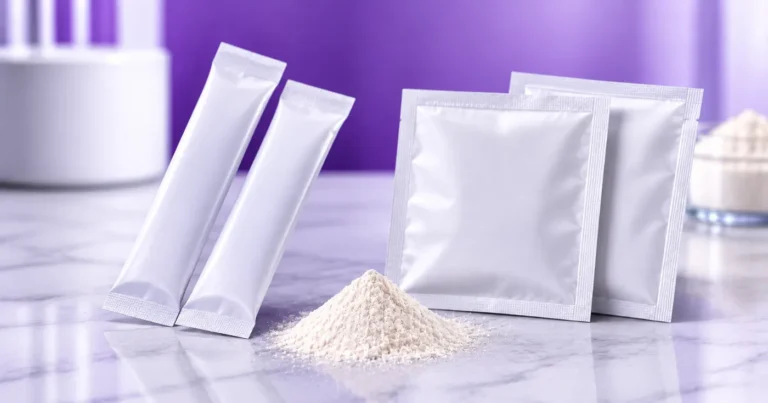
| Protein, collagen and greens powders | Powder in jars, pouches or stick packs | Serving size. Flavor and sweetener system. Package format. |
| Functional foods and beverages | Bars, ready-to-drink | Food or supplement pathway, because claims and label format differ. |
Format also drives stability, shelf life and cost, so settle it before you lock a specification.
What Are the Limitations of Nutraceuticals?
A market label removes no regulatory limit. Three limits shape product decisions:
- Regulatory ceiling. Disease treatment language is off limits.
- Substantiation. Each claim needs evidence on file, and the depth of evidence differs by ingredient.
- Quality variance. Identity, purity and potency depend on sourcing and testing.
What Forms Do Nutraceuticals Come In?
WB Blends produces supplements in three forms: capsules, powders, and liquids. Each form fits different ingredients, doses, and customer habits. The format choice shapes formulation, stability, shelf life, and cost. Selecting the form is a product decision, not a packaging afterthought.
| Form | Suited to | Formulation considerations | Customer appeal |
|---|---|---|---|
| Capsule | Botanical extracts, probiotics, precise unit doses | Fill weight limits, powder flow, excipient choice | Portable, tasteless, exact dose |
| Powder | High-dose ingredients, multi-ingredient blends | Flowability, clumping, solubility, flavor system, moisture | Flexible serving size, flavor variety |
| Liquid | Fast-dispersing ingredients, tinctures, shots | Preservation, shelf stability, taste masking, container fit | Easy to take, quick to consume |
How Are Nutraceutical Products Made?
Manufacturing takes a product from quote to delivery in six steps. A Certificate of Analysis ships with every lot.
| Step | What happens |
|---|---|
| 1. Preliminary Quote | Your brand shares the concept, format and volume. The preliminary quote takes 5-6 business days. |
| 2. R&D (if needed) | Development work happens only when the project needs it. Your formula stays your intellectual property. |
| 3. Purchase Order | You place the PO. You work with a Sales contact before the PO and an Account Manager after it. |
| 4. FPS and Deposit/Approval | The Finished Product Specification (FPS) is approved before production starts. |
| 5. Production | Blending, filling or formulating, and packaging. Every lot is tested in-house for identity and appearance, heavy metals by ICP-MS, and microbial limits. |
| 6. Delivery with COA | The Certificate of Analysis ships with the Finished Product Shipping Spec. Tracking is provided at dispatch. |
How Big Is the Nutraceutical Market?
Estimates for the 2025 global market run from $480.7 billion to $636.2 billion. Each firm draws the market boundary and models growth its own way, so cite the source when you use a figure.
| Research firm | 2025 value | Forecast | CAGR |
|---|---|---|---|
| Grand View Research | $636.2 billion | $1,151.5 billion by 2033 | 7.7% (2026-2033) |
| Research Nester | $480.7 billion | $805.6 billion by 2035 | 5.3% (2026-2035) |
Grand View counts dietary supplements, functional foods, functional beverages and infant formula. For your brand, the category your product enters matters more than the market figure.
How Do You Choose a Nutraceutical Manufacturer?
Choose a manufacturer on certification, testing, format range, and communication. A strong partner documents every batch, explains every specification, and answers regulatory questions before launch. Price matters less than consistency. For a longer guide, read how to choose a supplement contract manufacturer.
Use this checklist:
- GMP certification. Look for third-party certification such as NSF/ANSI 455-2.
- Testing depth. Confirm identity, potency and contaminant testing on incoming material and finished product.
- Format range. Match the partner to your formats: capsule, powder or liquid.
- Development model. Ask whether the partner offers turnkey development or toll manufacturing for your own formula. See turnkey vs tolling manufacturing.
- Documentation. Require a finished product specification and certificates of analysis.
- Minimum order quantities. Confirm MOQs before formulation begins.
- Communication. Expect a named contact and clear timelines.
How WB Blends handles this
WB Blends is a dietary supplement contract manufacturer in Spanish Fork, Utah, with 25+ years of experience. The company makes finished dietary supplements in capsule, powder and liquid formats on turnkey and toll programs. That is the core of its nutraceutical contract manufacturing. Every lot is tested in-house for identity and appearance, heavy metals by ICP-MS, and microbial limits, and a Certificate of Analysis ships with each lot. WB Blends is FDA Registered. Lead times are 10-12 weeks for new products and 8-10 weeks for returning ones. Your formula stays your intellectual property. Request a quote to start with a preliminary quote.
FAQs
Are nutraceuticals the same as supplements?
No. Nutraceutical is a market term for an ingredient category. Dietary supplement is a legal product category defined by DSHEA. Most nutraceutical products reach the US market as dietary supplements, so the two overlap. The legal category, not the marketing label, sets your claims and compliance duties.
Do nutraceuticals require FDA approval?
No. FDA does not approve dietary supplements before they reach the public. Your brand is responsible for safety and for substantiating label claims. You must notify FDA within 30 days of first marketing a structure/function claim, and some new dietary ingredients need a safety submission at least 75 days before marketing.
Are vitamins nutraceuticals?
Sometimes, in the market sense. A vitamin sold in a capsule or powder is a dietary supplement under US law, whatever the marketing label. The word nutraceutical adds nothing legally. Your Supplement Facts panel, claims and GMP duties are the same either way.
Are probiotics nutraceuticals?
Often, yes, in the market sense. A probiotic is a live microbial strain, and brands usually sell it in capsule or powder form as a dietary supplement. The strain list, the count stated on the label and your claims shape the specification and the label review.
What is a nutraceutical manufacturer?
A nutraceutical manufacturer produces finished supplements for brands. WB Blends makes capsules, powders and liquids on turnkey and toll programs. The path runs from a preliminary quote through production to delivery with a Certificate of Analysis. R&D is available when a project needs it.
How do you choose a format for a nutraceutical product?
Start with the ingredient and the dose per serving. Capsules suit precise unit doses. Powders suit high-dose and multi-ingredient blends. Liquids suit fast-dispersing ingredients and tinctures. Then weigh stability, shelf life, cost and how your customer will take it. Confirm the choice at the quote stage.
Planning a launch? Request a quote. Preliminary quotes take 5-6 business days.
This article is general information for supplement brands. It is not legal or regulatory advice. Confirm your claims and labels with a qualified regulatory advisor.